

Emergency Preparedness Tips for Teachers, Staff, and School Volunteers
The average school day has hundreds of moving parts. Students change classrooms throughout the day, buses come and go, and recess comes with its own chaotic challenges.
Most days go exactly as planned — or at least close enough.
But not every day will.
Whether it’s a student who begins choking in the cafeteria or a security threat on campus, preparation allows school staff to respond quickly and confidently in the event of an emergency.
Everyone Has a Role in School Safety
Emergencies don’t always happen in the nurse’s office or when an administrator is nearby. They happen where students learn, play, eat, and travel.
The closest adult will often be the first to respond.
That means emergency preparedness extends well beyond teachers and school nurses. Support staff, coaches, cafeteria workers, custodians, bus drivers, substitutes, and school volunteers should all understand the school’s emergency plan and know what to do until first responders arrive.
Emergencies can happen anywhere
Different parts of the school day come with different risks:
- Playgrounds: Falls, broken bones, heat-related illnesses, and head injuries can happen during recess or physical education.
- Transportation: Bus accidents, physical violence, or severe weather can affect students before they reach campus or on the way home.
- Field trips: Staff may need to respond without immediate access to school resources, making communication, first aid supplies, and emergency contacts especially important.
- Cafeterias: Choking is one of the most time-sensitive emergencies in a school setting. Someone nearby needs to recognize the signs and act immediately.
- Athletic events and after-school activities: Injuries, sudden cardiac arrest, dehydration, and severe weather can occur outside normal school hours when different staff members may be supervising students.
The goal: Every adult should understand their role before an emergency happens.
Start With a Comprehensive Emergency Response Plan
Every school should have an emergency response plan that prepares staff for a wide range of situations.
No plan can anticipate every scenario, but it should provide clear guidance for:
- Medical emergencies
- Severe weather
- Fires
- Transportation incidents
- Security threats, including active shooter situations
- Other potential emergencies specific to the school or community
What should your emergency plan include?
The first step is conducting a risk assessment that considers the school’s layout, student population, local hazards, and available resources.
At a minimum, the school safety plan should clearly identify:
- Roles and responsibilities for staff members
- Emergency communication procedures
- Evacuation and reunification plans
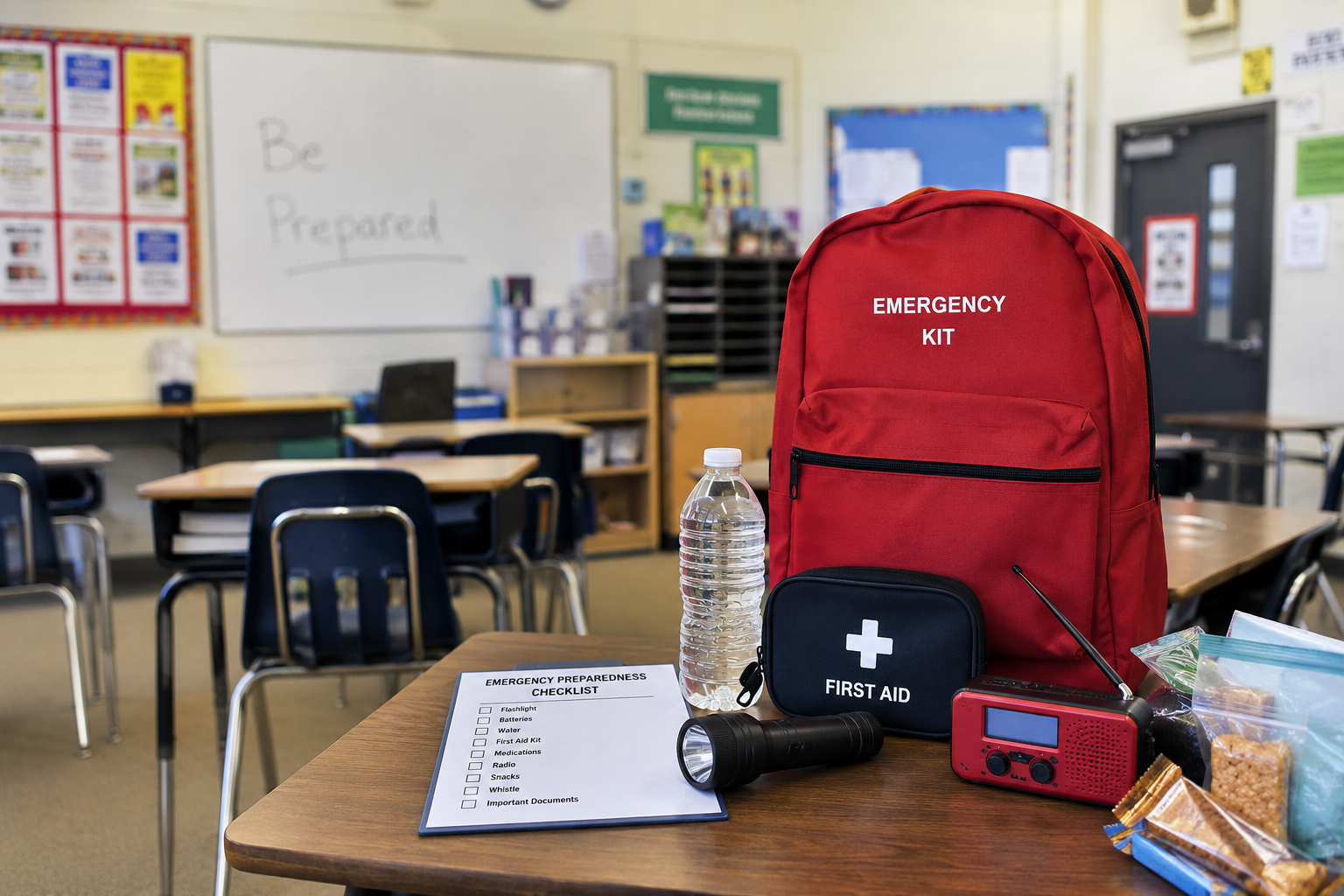
- Locations of AEDs, emergency kits, and supplies
- Procedures for students and staff with disabilities or specific needs
- Communication channels for notifying staff, families, and emergency services
The plan also needs to stay current.
New staff members join throughout the year. Facilities change. Emergency procedures evolve. Regular reviews help ensure everyone is working from the same playbook when an emergency occurs.
Make CPR, AED, and First Aid Readiness a Priority
Medical emergencies can happen without warning, and the first few minutes are often the most critical.
While emergency responders are on the way, school staff are frequently the ones providing immediate care.
CPR, AED, and First Aid training prepare employees to:
- Recognize an emergency
- Activate EMS quickly
- Perform CPR
- Use an AED
- Provide basic first aid
- Control life-threatening bleeding
- Respond to severe allergic reactions
- Provide care until professional responders arrive
In practice, that could mean using an AED on someone experiencing sudden cardiac arrest, treating a severe allergic reaction, or controlling life-threatening bleeding.
Training turns an emergency plan from something written on paper into something staff can actually use.
Practice Emergency Protocols Through Regular Drills
Even the best emergency plan isn’t effective if people don’t know how to put it into action.
Regular drills help staff and students become familiar with emergency procedures before they’re needed, reducing confusion during a real emergency.
Schools should routinely practice:
- Fire evacuation routes and severe weather protocols
- CPR and First Aid scenarios, including AED retrieval and EMS activation
- Lockdowns and shelter-in-place procedures
- Reunification and parent notification procedures
Don’t just conduct the drill — evaluate it
Drills shouldn’t become exercises people simply complete to check a box.
After each drill, ask:
What went well? What slowed us down? What would we do differently in a real emergency?
Those answers can reveal simple but important problems — an AED that’s farther away than expected, confusion about who calls 911, an evacuation route that doesn’t work as planned, or staff members who aren’t sure of their responsibilities.
Regular practice followed by evaluation creates continuous improvement in the school’s emergency response.
Coordinate With Community Partners
Preparing for emergencies extends beyond school grounds.
Building relationships with local law enforcement, fire departments, EMS, and other community organizations before an emergency occurs improves coordination when every minute counts.
These partnerships can also:
- Strengthen training opportunities
- Help identify weaknesses in emergency plans
- Improve communication during major incidents
- Support recovery after traumatic events
- Connect schools with mental health professionals and other community resources
Working together before a crisis creates clearer expectations and a more coordinated response when an emergency actually occurs.
Build Preparedness Into Everyday School Culture
Emergency preparedness shouldn’t be something that’s discussed only during orientation or annual training.
It should become part of normal school operations.
Throughout the year, schools should:
- Review emergency procedures with new employees
- Refresh CPR and First Aid skills
- Check AEDs and other emergency equipment
- Restock first aid and emergency supplies
- Review emergency contact information
- Practice emergency procedures
- Encourage staff to report safety concerns and ask questions
When preparedness becomes part of everyday operations, everyone — from administrators and teachers to support staff and volunteers — is better equipped to respond with confidence.
Those ongoing efforts help create a safer learning environment and support the well-being of students, staff, and the entire school community.
Need CPR, AED, and First Aid Certification For the New School Year?
Roanoke CPR provides on-site CPR, AED, and First Aid training for schools throughout Roanoke and Southwest Virginia.

No Comments
Sorry, the comment form is closed at this time.